 Bill My Car
RTO & Ownership Transfer
Form 29C: Dealer Custody and Deemed Ownership of a Used Vehicle
For Car and Bike Dealers in India
Start free →Form 29C is the dealer custody intimation introduced by the Ministry of Road Transport and Highways (MoRTH) under the Central Motor Vehicles Rules (Amendment) 2022 [Rule 55C], notified vide GSR 703(E) dated 14 September 2022. It applies exclusively to registered used-vehicle dealers and covers the period a vehicle is held in stock before resale.
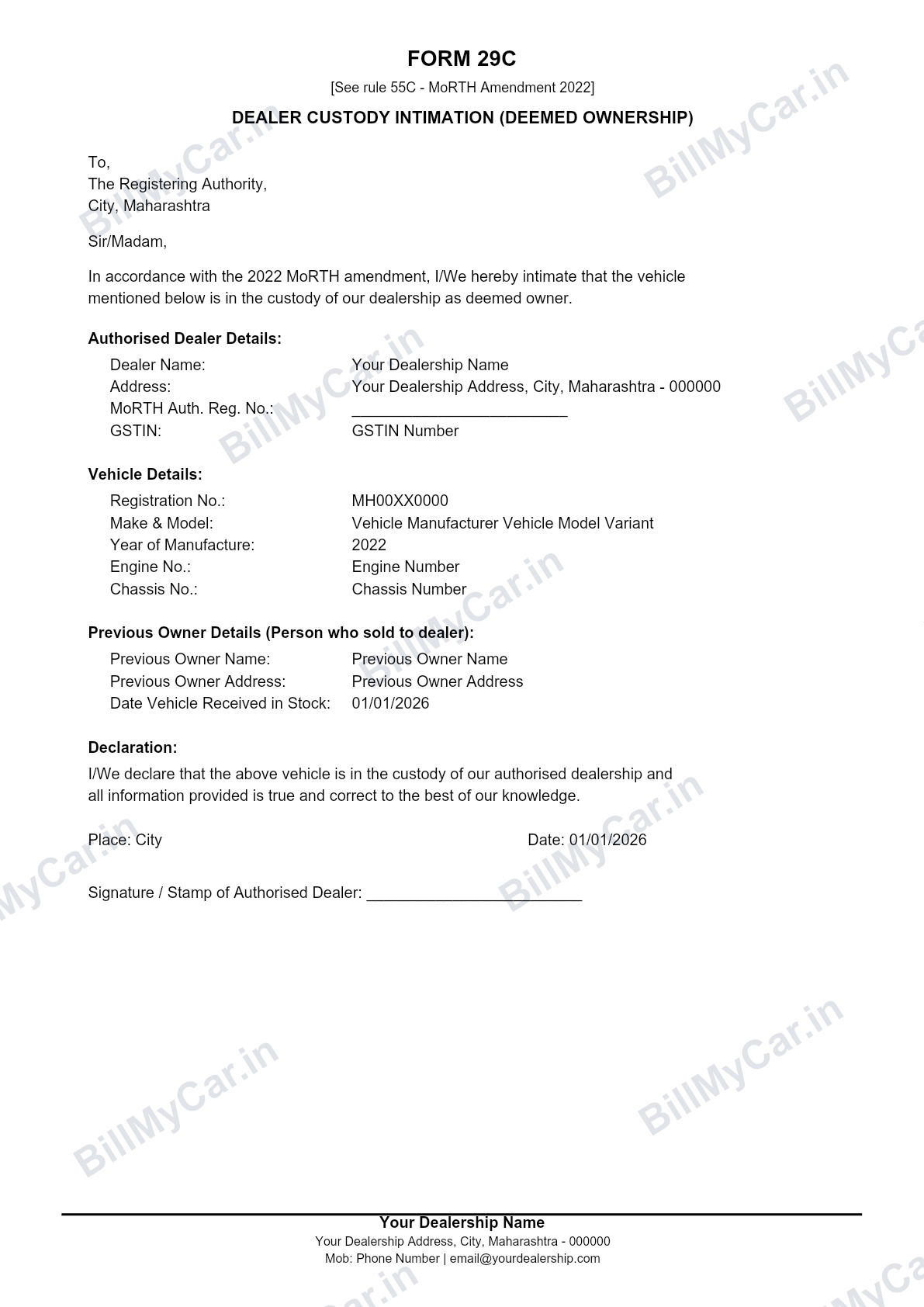
A filled sample of Form 29C generated with Bill My Car. Sign in to BillMyCar.in and generate yours, auto-filled, in seconds.
What the 2022 MoRTH amendment changed
Before the 2022 amendment, every used-car transaction required a full RC transfer from the previous owner to the dealer, and then another transfer from the dealer to the buyer. Two full transfer processes per vehicle created delays, double fees and a backlog at RTOs.
The amendment introduced the concept of deemed ownership: a MoRTH-authorised dealer is considered the legal owner of a vehicle the moment they take custody, without an immediate RC transfer. The dealer files Form 29C to officially intimate the RTO of this custody. When the dealer sells the vehicle, a single RC transfer goes straight from the original owner to the final buyer.
What Form 29C contains
- Dealer name and MoRTH authorisation registration number
- Registration number, engine number and chassis number of the vehicle
- Name and address of the previous owner (the person who sold to the dealer)
- Date the vehicle was received in the dealer's custody
- Dealer signature
When to file Form 29C
File Form 29C with the RTO as soon as a used vehicle enters the dealer's stock. Prompt filing ensures the dealer's deemed ownership is formally on record, which protects the dealer from liability for events (accidents, challans, traffic violations) that involve the vehicle before resale.
Who qualifies to file Form 29C
Only MoRTH-registered used-vehicle dealers can use this form. Eligibility requires:
- Formal registration under the 2022 Rules with a valid MoRTH dealer registration number
- A physical place of business meeting MoRTH standards
- Compliance with record-keeping requirements for vehicles in custody
Individuals flipping vehicles privately cannot use Form 29C and must do a full RC transfer for each leg of the transaction.
Form 29C and the RC transfer sequence
For a MoRTH dealer, the paperwork sequence for a used-car resale is:
- Purchase: Dealer takes custody and files Form 29C (deemed ownership intimation).
- Stock period: Vehicle is in the dealer's inventory under deemed ownership.
- Sale: Form 29 and Form 30 are filed to transfer ownership directly from the original registered owner to the buyer.
The dealer's name is never required to appear as owner on the RC, which is the core efficiency the 2022 amendment created.
Practical checklist for dealers
Before filing Form 29C, make sure you have:
- Your MoRTH dealer registration number (add it once in your Bill My Car Settings and it auto-fills on every Form 29C)
- The previous owner's full name and address
- The date the vehicle was physically received
- The vehicle's registration, engine and chassis numbers from the RC book
Generate Form 29C in seconds
Bill My Car auto-fills Form 29C from the invoice: registration number, engine number, chassis number, and your saved MoRTH authorisation number. You only enter the previous owner's details and the custody date, and the form is ready to print.
Generate RTO forms in seconds
Bill My Car turns one invoice into GST & non-GST bills, sale letters, Form 29, Form 30 and delivery notes, auto-filled and ready to download. Built for Indian used-car dealers.
Try Bill My Car free →Frequently asked questions
What is deemed ownership of a motor vehicle?
Deemed ownership means a registered, MoRTH-authorised used-vehicle dealer is treated as the legal owner of any vehicle in their custody, even before the RC is formally transferred. This covers the dealer's liability for the vehicle during the stock period.
Who needs to file Form 29C?
Only MoRTH-authorised used-vehicle dealers need to file Form 29C. Individuals buying and reselling cars are not covered by this provision and must complete a full RC transfer via Form 29 and Form 30.
What is a MoRTH authorised dealer?
A MoRTH (Ministry of Road Transport and Highways) authorised dealer is a used-vehicle business that has obtained formal registration under the 2022 Motor Vehicles (Amendment) Rules. They receive a registration number that must appear on Form 29C and other official documents.